Have you ever watched a standard rubber grommet fail under extreme heat or chemical exposure? Off-the-shelf components often cannot survive demanding environments. Custom molded rubber parts solve this problem. Manufacturers engineer these components to meet your exact dimensional, material, and performance specifications. They protect critical systems across automotive, medical, and industrial applications.
This guide explains the complete journey of custom rubber molding. You will learn how to select the right elastomer, evaluate a custom rubber manufacturer, and avoid costly design mistakes. Whether you need rubber molded products or complete custom rubber solutions, this resource equips engineers and procurement managers with the knowledge to make confident decisions. Your roadmap from concept to production-ready custom rubber parts starts here.
Key Takeaways
- Custom molded rubber parts outperform standard components by providing a perfect fit, optimized performance, and long-term cost savings.
- Select the right elastomer based on your operating temperature, chemical exposure, and compression set requirements to ensure durability.
- Choose a manufacturer with relevant certifications like ISO 9001 and IATF 16949, and strong engineering support for a successful partnership.
- Prototype your design to validate material and geometry before committing to production tooling, preventing costly errors.
- Invest time in material selection and manufacturer evaluation to reduce risks and achieve reliable, high-performance rubber parts.
Understanding Custom Rubber Molding Fundamentals
What Are Custom Molded Rubber Parts?
Custom molded rubber parts start as raw elastomeric compounds. Manufacturers shape these materials inside precision-engineered molds under heat and pressure. The result: components built to your exact drawings, tolerances, and performance targets. Unlike standard catalog items, each piece serves a specific function in a specific environment.
The rubber molding process transforms raw polymer into finished geometry. You choose the elastomer chemistry, hardness, and reinforcement. You specify dimensional tolerances that off-the-shelf products cannot match. This approach suits applications where failure creates safety risks or costly downtime. For example, automotive wire harness gaiters require exact fit around connectors. A standard grommet might allow water ingress. A custom design seals completely.
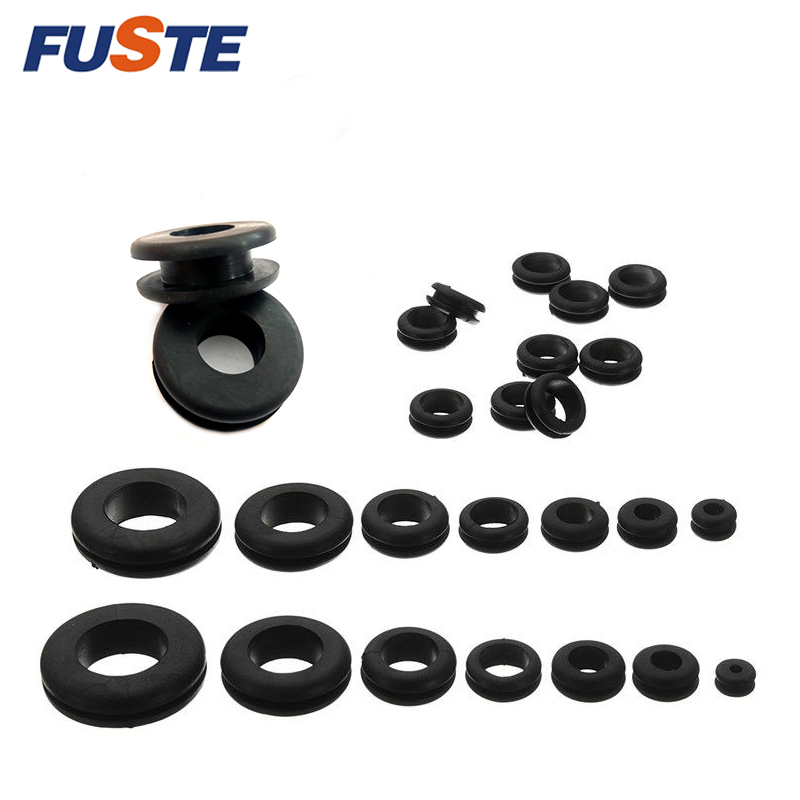
Fuste manufactures custom molded rubber products for applications including automotive wiring protection, fluid handling, and sealing. Its product range includes rubber grommets, hoses, seals, and other molded components, with material and tooling selection based on the customer's operating requirements.
The Value of Custom Rubber Molding Over Standard Components
Standard rubber parts force you to adapt your design around their limitations. Custom rubber molding reverses that relationship. You define the problem; the manufacturer engineers the solution. This flexibility delivers four distinct advantages.
First, you achieve a perfect fit. Components match your mating surfaces exactly, eliminating gaps that cause leaks or noise. Second, you optimize performance. Material selection aligns with your temperature range, chemical exposure, and mechanical loads. Third, you gain design freedom. Complex geometries, inserts, and multi-durometer parts become possible. Fourth, you reduce long-term costs. A properly specified part lasts longer, reducing replacements and downtime.
Consider rubber component manufacturing for automotive applications. Sealing systems for brakes and clutches demand precise compression set resistance. Interior consoles use rubber for noise suppression. Engine mounts must withstand extreme temperatures and mechanical stress. Each application requires different compounds and geometries. Custom rubber molding services address these varied needs through tailored formulations.
These applications illustrate why custom rubber molding requires more than selecting a standard part. Material formulation, geometry, hardness, tooling, and processing conditions must work together to meet the requirements of the final application.
The Three Primary Rubber Molding Processes
Every custom rubber molding project begins with one critical decision: which manufacturing method will shape your part. Three primary techniques dominate the industry: compression molding, injection molding, and transfer molding. Each rubber molding method offers distinct advantages in cost, volume capability, precision, and tooling complexity. Your choice directly impacts part quality, cycle time, and overall project economics.
Compression Molding: Cost-Effective Simplicity
Compression molding stands as the oldest and most straightforward rubber molding process. You place a pre-measured rubber charge directly into an open heated mold cavity. The press closes, applying heat and pressure, forcing the material to fill the cavity shape. The vulcanization process then cures the rubber, cross-linking polymer chains to achieve final physical properties.
This method excels for large, simple parts and low-to-mid production runs. Tooling costs remain modest compared to other techniques. A simple aluminum single-cavity prototype mold might cost around $2,000. A complex hardened steel 64-cavity production mold with features like misting, overflowing, and center gating reaches the upper range near $15,000. This cost structure makes compression molding attractive for prototyping and short production cycles.
The trade-off involves longer cycle times and less precise tolerances. Flash formation requires secondary trimming operations. However, for many rubber molded products like grommets, seals, and simple bushings, compression molding delivers excellent value. You gain design flexibility with minimal upfront investment.
Injection Molding: Precision at Scale
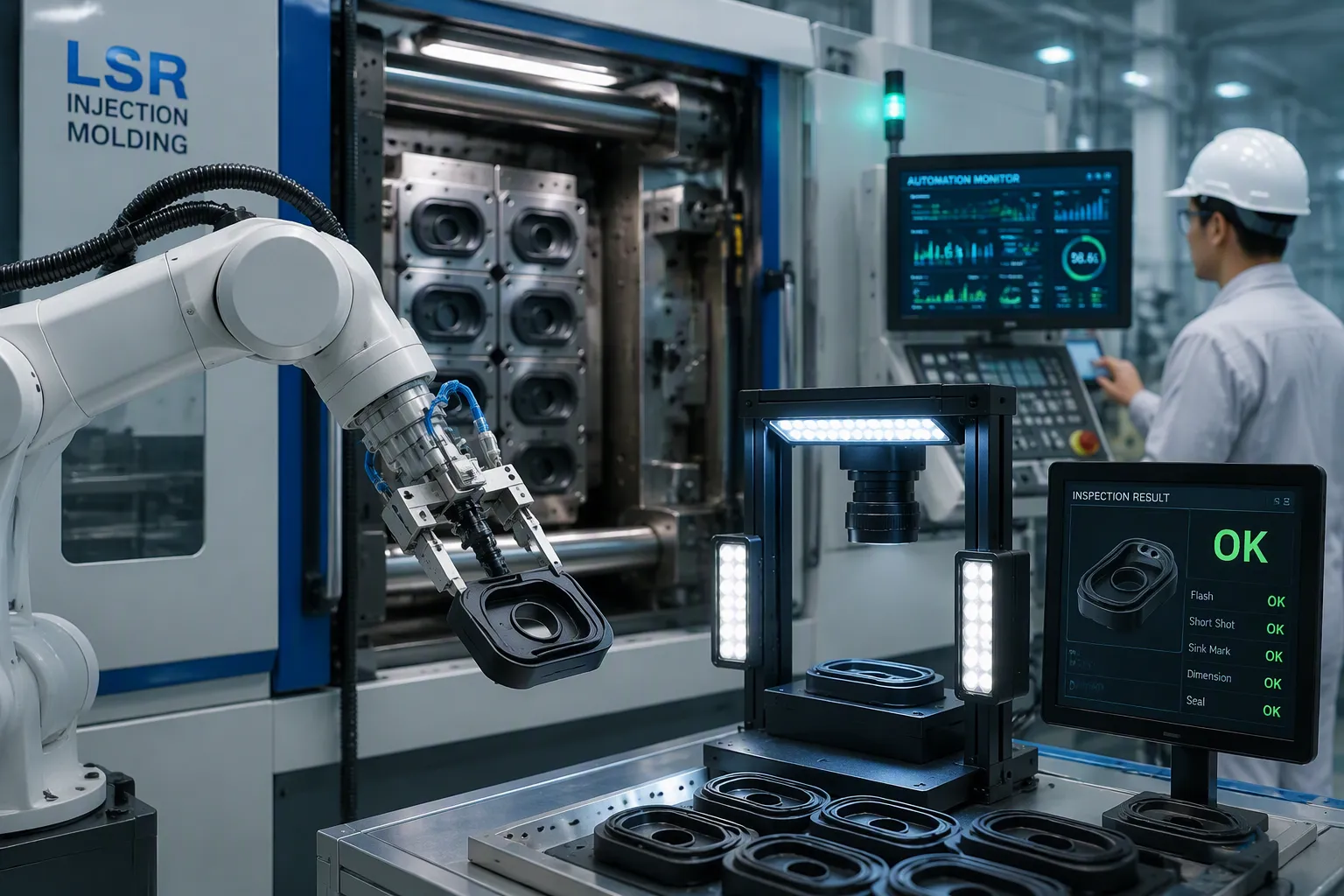
Injection molding operates differently. The rubber molding machine injects heated, viscous material into a closed mold under high pressure. This rubber moulding process offers superior repeatability, tighter tolerances, and faster cycle times. The vulcanization occurs rapidly within the heated mold, producing consistent parts with minimal flash.
The rubber moulding services using injection technology achieve high precision and accuracy, making it ideal for complex geometries and demanding applications. Volume requirements determine cost-effectiveness. Low-volume injection molding suits production under 500 units using specialized processes. Mid-volume ranges from 500 to 10,000 parts. Traditional high-volume injection molding becomes economically justified at 5,000 units or more.
Low-volume injection molding serves short-run production with volumes from 1,000 to 10,000 parts. Below approximately 1,000 units, alternative methods like 3D printing become more economical.
Injection molding requires more complex mold design and higher tooling investment. Yet for rubber component manufacturing at scale, the per-part cost drops significantly. You achieve consistent quality across thousands of units. The right rubber molding method reduces waste, shortens lead times, and ensures your custom rubber manufacturer delivers parts that meet exact specifications every cycle.
Transfer Molding: Versatility for Complex Parts
Transfer molding combines the advantages of compression molding and injection molding by using a transfer pot and plunger system to force preheated rubber compound into closed mold cavities. This process provides better control over material flow compared with traditional compression molding, making it suitable for rubber parts with complex geometries, tighter tolerances, or embedded inserts such as metal components.
Transfer molding is often selected for applications where consistent cavity filling and detailed features are important, while production volumes do not justify the higher tooling investment of injection molding. However, the process requires more complex mold structures and careful control of material preparation, transfer pressure, and curing conditions.
Selecting the Right Elastomer for Your Application
Choosing the correct elastomer determines whether your custom molded rubber parts survive years of service or fail within months. Material selection ranks as the most critical decision in any rubber molding project. The wrong compound leads to premature cracking, swelling, or permanent deformation. The right compound delivers reliable performance across the entire product lifecycle. You must evaluate several key properties before committing to a formulation.
Critical Material Properties to Evaluate
Start with operating temperature. Every elastomer has a continuous service range. Exceeding that range accelerates degradation and shortens part life. Silicone rubber withstands continuous temperatures from -60°C to +230°C, with specialized grades handling short-term exposure up to +300°C. This wide window makes silicone ideal for engine compartments and industrial applications where heat fluctuates dramatically.
Chemical compatibility ranks second. Consider every fluid your part will contact: oils, fuels, coolants, solvents, or cleaning agents. NBR offers excellent oil resistance below 120°C, but degrades above that threshold. FKM maintains integrity in aggressive petroleum fluids from -20°C to 200°C. Your custom rubber manufacturer should review your full chemical exposure profile before recommending a compound.
Compression set determines sealing longevity. This property measures how much a rubber part permanently deforms after prolonged compression and heat exposure. A low compression set means the material resists permanent deformation, maintaining its shape and sealing force over time. In applications with sustained pressure or thermal cycling, a low compression set ensures the seal remains tight and effective, preventing leaks.
Compression set data at the service temperature and over the service time period is the primary criterion for seal material selection in high-temperature applications.
Never use room-temperature data for high-temperature designs. A material showing acceptable compression set at 70°C may be entirely unsuitable at 150°C or 200°C. Test conditions must match your real service environment.
Additional properties deserve attention: tensile strength, tear resistance, abrasion tolerance, ozone resistance, and hardness (measured on the Shore A scale). Environmental factors like UV exposure, salt spray, or steam contact also influence compound choice. Regulatory requirements may restrict certain plasticizers or accelerators, especially for food-contact or medical applications.
Comparing Common Rubbers: EPDM, NBR, Silicone, and FKM
The optimal rubber material depends on the operating environment. EPDM is commonly selected for weather and water resistance, NBR for oil and fuel exposure, silicone for high-temperature applications, and FKM for demanding chemical and high-temperature sealing conditions.
For OEM projects, request material samples before committing to tooling. Test the compound under your actual conditions. Verify that the vulcanization process achieves the specified physical properties. This validation step prevents costly revisions after your mold enters production. The right material partnership transforms a standard rubber molded product into a high-performance engineered solution.
Key Industries and Applications for Rubber Component Manufacturing
Custom molded rubber parts serve critical functions across nearly every manufacturing sector. Each industry demands specific material properties, tolerance levels, and certification standards. Understanding these requirements helps you select the right partner for your project.
Automotive Applications: Seals, Gaiters, and Vibration Control
The automotive sector relies heavily on custom rubber components for sealing, protection, vibration control, and noise reduction. Wire harness gaiters are a good example. These molded rubber covers protect electrical connectors from water, dust, abrasion, and vibration while providing a precise fit around complex connection points. Material selection and part geometry must be matched to the vehicle's operating environment to maintain reliable protection throughout the component's service life.
Other automotive applications include hoses, seals, mounts, and dust covers, each with different requirements for temperature resistance, fluid compatibility, flexibility, and mechanical durability. This variety illustrates why custom molded rubber parts are often developed around the specific application rather than selected as standard components.
Medical, Industrial, and Household Applications
Medical applications require elastomer molded products that meet specific requirements for biocompatibility, cleanliness, and chemical resistance. Materials used in patient-contact or fluid-contact applications may need to comply with applicable regulatory requirements, while components exposed to repeated cleaning or sterilization must maintain their physical properties under those conditions.
Industrial applications include hydraulic systems, pneumatic controls, chemical processing equipment, and other machinery where rubber seals and molded components may encounter pressure, oils, chemicals, or continuous mechanical stress.
Household applications are typically less demanding but still require reliable sealing, flexibility, and resistance to water, heat, or repeated movement. Common examples include appliance gaskets, plumbing seals, and vibration isolators.
Across these applications, custom molded rubber parts allow component geometry and material properties to be matched to specific operating conditions. The appropriate material, molding process, tooling design, and quality requirements should be determined according to the function and environment of the finished part.
How to Choose a Reliable Custom Rubber Manufacturer
Selecting the right partner for your custom rubber molding project requires careful evaluation. A reliable custom rubber manufacturer brings deep material knowledge, robust production systems, and proven quality processes. These factors determine whether your parts arrive on time, within budget, and meeting every specification.
Evaluating Technical Expertise and Certifications
Start by examining the manufacturer's experience with your specific industry. Automotive rubber parts demand different expertise than medical or industrial components. Ask about their track record with similar applications. Request case studies or references. A manufacturer who has solved problems like yours can anticipate challenges before they arise.
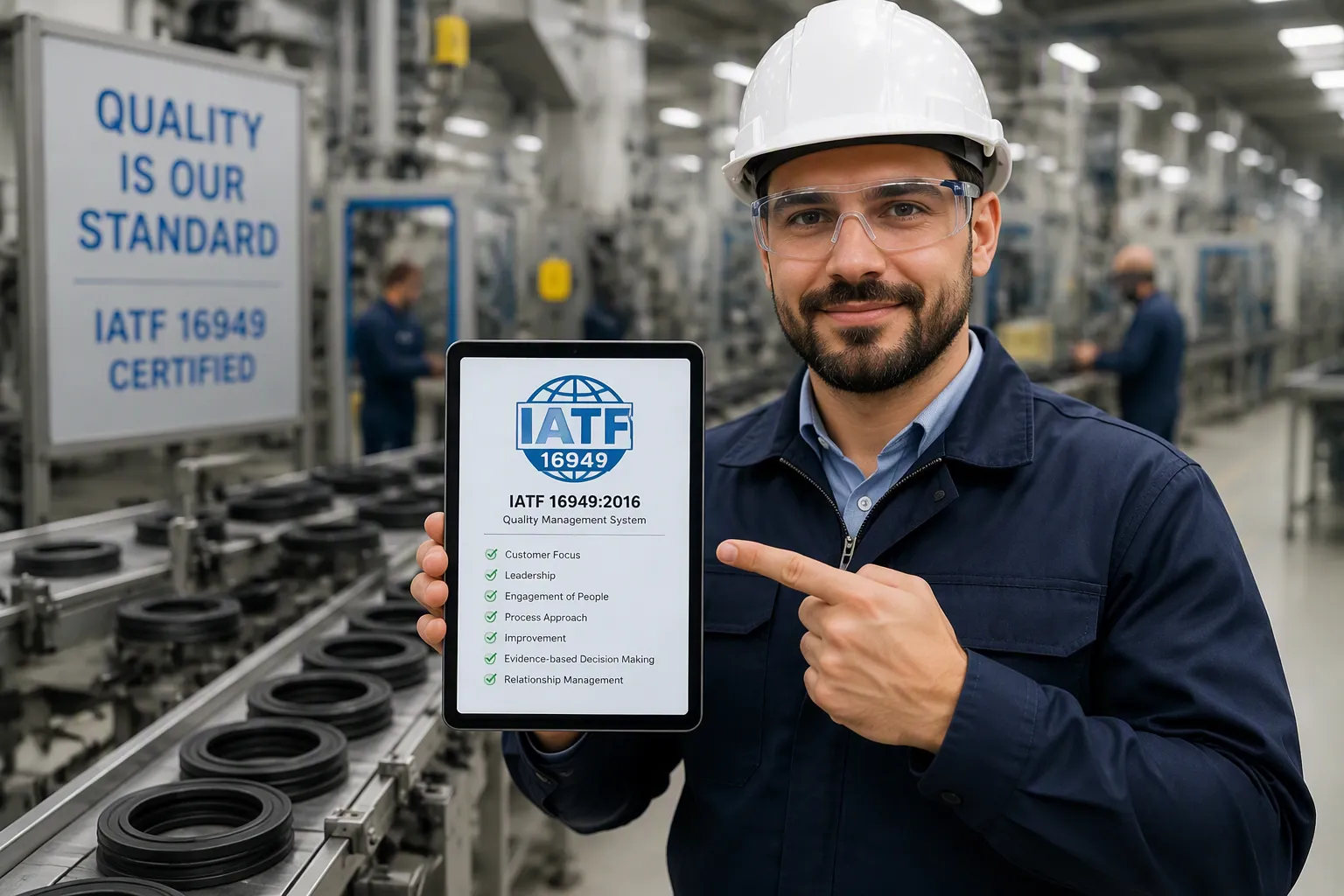
Certifications provide objective proof of quality systems. They show a commitment to consistent processes and thorough documentation.An ISO 9001 certification guarantees a thorough inspection process and detailed documentation throughout the production process.This standard forms the foundation for reliable rubber component manufacturing. For automotive projects, IATF 16949 certification becomes essential. It demonstrates compliance with strict automotive quality requirements.
Fuste maintains both IATF 16949 and ISO 9001 certifications, plus ISO 14001 for environmental management. Their facilities implement 5S management, ensuring precision and consistency from raw material to finished product. This quality control infrastructure means every rubber molded product meets your exact specifications. You can trust their industrial rubber products to perform consistently across production runs.
Visit the facility if possible. Observe how they handle raw materials, operate their equipment, and conduct inspections. A well-organized production floor reflects disciplined processes. Ask about their testing methods for hardness, tensile strength, and compression set. These capabilities directly affect your part quality and long-term reliability.
The Importance of Engineering Support and Communication
Technical expertise alone does not guarantee success. You need a partner who communicates clearly and supports you through every project phase. The best custom rubber molding services include dedicated engineering support from concept through production.
A professional engineering team develops custom formulations matched to your operating conditions. They recommend the right elastomer, design the mold geometry, and optimize the rubber molding process parameters. This collaboration prevents costly mistakes. For example, understanding shrinkage during the process requires experienced engineers who know how to compensate in the tool design. The molded components must meet your dimensional tolerances exactly.
Fuste's engineering team develops custom rubber solutions for challenging applications. They work from your drawings or samples, creating tailored formulations and tooling designs. They support your project from material formulation through molding, finishing, and quality inspection. This support helps you solve technical challenges and reduce overall project costs. Their expertise in elastomer molded products covers a wide range of materials. Whether you need rubber moulding services for simple grommets or complex seals, they provide comprehensive support.
Communication matters throughout the project. The manufacturer should provide clear timelines and regular updates. Look for a partner who asks questions about your application rather than simply quoting your print. Those questions reveal genuine engagement with your success.
Custom molded rubber parts require close collaboration between your team and the manufacturer. When you choose a partner with strong engineering support, you transform a simple purchase into a strategic relationship. That relationship delivers better parts, fewer revisions, and faster time to market.
For OEM projects, request design for manufacturability feedback early. An experienced manufacturer can suggest geometry changes that improve production without affecting function. These suggestions often reduce tooling costs and cycle times.
Common Mistakes to Avoid in Custom Rubber Molding
Design and Material Selection Pitfalls
Many engineers rush through material selection without testing compounds under actual operating conditions. You might choose an elastomer based on a data sheet alone. That approach ignores real-world variables like temperature cycling, fluid exposure, and mechanical stress. A material that performs well at 70°C might fail completely at 150°C. Inadequate testing leads to premature cracking, swelling, or compression set failure. These issues force expensive redesigns and production delays. You must validate your compound selection through rigorous testing that matches your service environment.
Another common mistake involves ignoring environmental factors beyond temperature. Ozone resistance matters for outdoor applications. UV exposure degrades certain polymers rapidly. Chemical resistance varies dramatically between elastomers. Selecting an NBR compound for a high-temperature oil application causes rapid degradation. The wrong choice turns your rubber molded products into liabilities.
Partnering with an experienced custom rubber manufacturer early in the design phase prevents these errors. Their engineers understand the subtle interactions between materials and operating conditions. They recommend the right elastomer molded products for your specific application. Proper material selection techniques prevent failures before they occur.
Failing to account for rubber shrinkage in mold design creates dimensional problems. Rubber contracts as it cools after vulcanization. Different compounds shrink at different rates. Your design must compensate for this behavior. Without proper allowance, your finished parts fall outside tolerance. This mistake wastes tooling investment and delays production. A professional engineering team anticipates shrinkage during the design phase, ensuring your industrial rubber products meet exact specifications.
Overlooking Tooling, Prototyping, and Lead Times
Tooling decisions directly impact your project outcome. Some buyers choose the cheapest option without considering long-term durability. A low-cost mold works for prototyping but wears quickly under production volumes. Steel tools cost more upfront but deliver consistent quality across thousands of cycles. You must match your rubber molding techniques to your volume requirements.
Prototyping represents a critical validation step. Skipping this phase to save time or money often backfires. A prototype reveals issues with material flow, shrinkage, and part geometry before you commit to production tooling. The rubber moulding process requires careful tuning of temperature, pressure, and cure time. Prototyping allows you to optimize these parameters. You verify that your OEM specifications translate into functional parts. This step prevents costly corrections during full production. The final molded component must meet your exact requirements.
Lead time communication prevents production delays. Rubber molding involves multiple stages: material compounding, tool fabrication, setup, and curing. Each stage requires time. Quality control checks add additional days. Discuss your timeline expectations early with your manufacturer. A reliable partner provides realistic schedules and keeps you informed throughout the process. Clear communication ensures your project stays on track and your production deadlines remain achievable.
Your Step-by-Step Guide to Starting a Custom Rubber Project
From Design and Material Specification to Prototyping
Your journey begins with defining the part's function. Ask yourself: What job must this component perform? Will it seal against fluid, dampen vibration, or protect wiring? Next, document the operating environment. Note the temperature range, chemical exposures, and mechanical loads your part will face. These details drive every subsequent decision in the steps in the custom rubber molding process.
With this information, you can select the appropriate elastomer and rubber molding technique. Your custom rubber manufacturer will recommend a compound based on your service conditions. For example, EPDM suits outdoor weathering, while FKM handles aggressive oils. You also need to choose between compression and injection molding based on your volume projections.
Before requesting a quote, prepare your technical documentation. A complete drawing package includes overall dimensions, material call-outs, and hardness specifications. You must also identify which tolerances are truly critical. Over-specifying every dimension drives up tooling costs unnecessarily. Focus precision on features that affect sealing or assembly.
Navigating Quoting, Tooling, and Production
When you contact a custom rubber manufacturer for pricing, provide a logical sequence of details. Start with the part type and use case. Then share your technical drawing or dimensioned sketch. Describe the operating conditions or specify the rubber grade you prefer. Include your Shore A hardness target, color, and surface finish requirements. State your estimated annual usage so the manufacturer can design an appropriate mold size.
The quoting process also requires discussing delivery expectations. Request a Certification of Conformance if your industry demands documented quality. Ask whether laboratory testing of material properties is included.
Once you approve the quote, tooling begins. Steel molds deliver durability and precision for production runs. Your mold design must account for rubber shrinkage, which varies depending on the polymer. Incorporate draft angles where possible, especially for harder materials. Maintain uniform wall thickness to prevent voids.
Prototyping validates your design before full production. Apply tight tolerances only where necessary. Use standard machining tolerances for non-critical areas. Enlarge internal corner radii to prevent tearing. During this phase, you verify that the vulcanization process achieves the specified physical properties. Fuste's engineering team supports you through each stage, from custom formulations to production validation. Their certified facilities ensure your industrial rubber products meet exact specifications. This structured approach transforms a concept into reliable custom molded rubber parts ready for OEM deployment.
Successful custom rubber molding requires a strategic approach. You must select the right material, choose the proper process, and partner with a reliable manufacturer. Investing time upfront in these fundamentals delivers superior part performance, lower lifecycle costs, and fewer production issues.
For a custom molded rubber parts project, consider requesting a design review, evaluating material samples, and obtaining a quote based on your specific application and production requirements.
FAQ
What is the typical lead time for custom rubber molding projects?
Lead times vary by project complexity. Simple compression molded parts may take a few weeks, while complex injection molded parts can take longer. Prototyping adds additional time. Discuss your timeline with your manufacturer early.
How much does tooling cost for custom rubber parts?
Tooling costs depend on your mold design and cavity count. A simple aluminum mold costs around $2,000. A complex steel mold reaches $15,000. Volume determines the right investment.
Can you mold rubber parts with metal inserts?
Yes. Insert molding bonds rubber to metal during curing. This technique creates durable molded components. Proper mold design ensures insert positioning.
What rubber molding techniques work best for complex parts?
Injection molding suits complex geometries. Compression molding handles simpler shapes. Both techniques deliver reliable results. Your manufacturer provides rubber molding services for prototypes and production.
What certifications should I look for?
ISO 9001 demonstrates quality systems. IATF 16949 is essential for automotive. ISO 14001 shows environmental management. These certifications ensure consistent quality for your OEM molded industrial rubber products.